AMERICAN VOICES OF UNITY
Exploring Presidential Perspectives
America's story has always included vigorous disagreement alongside a continuing search for common purpose. Throughout our history as a democracy, presidents have called on Americans to preserve liberty, embrace the responsibilities of citizenship, and sustain the bonds of national community. The perspectives that follow offer eight examples of that enduring conversation, and invite us to rediscover what we still share as Americans.
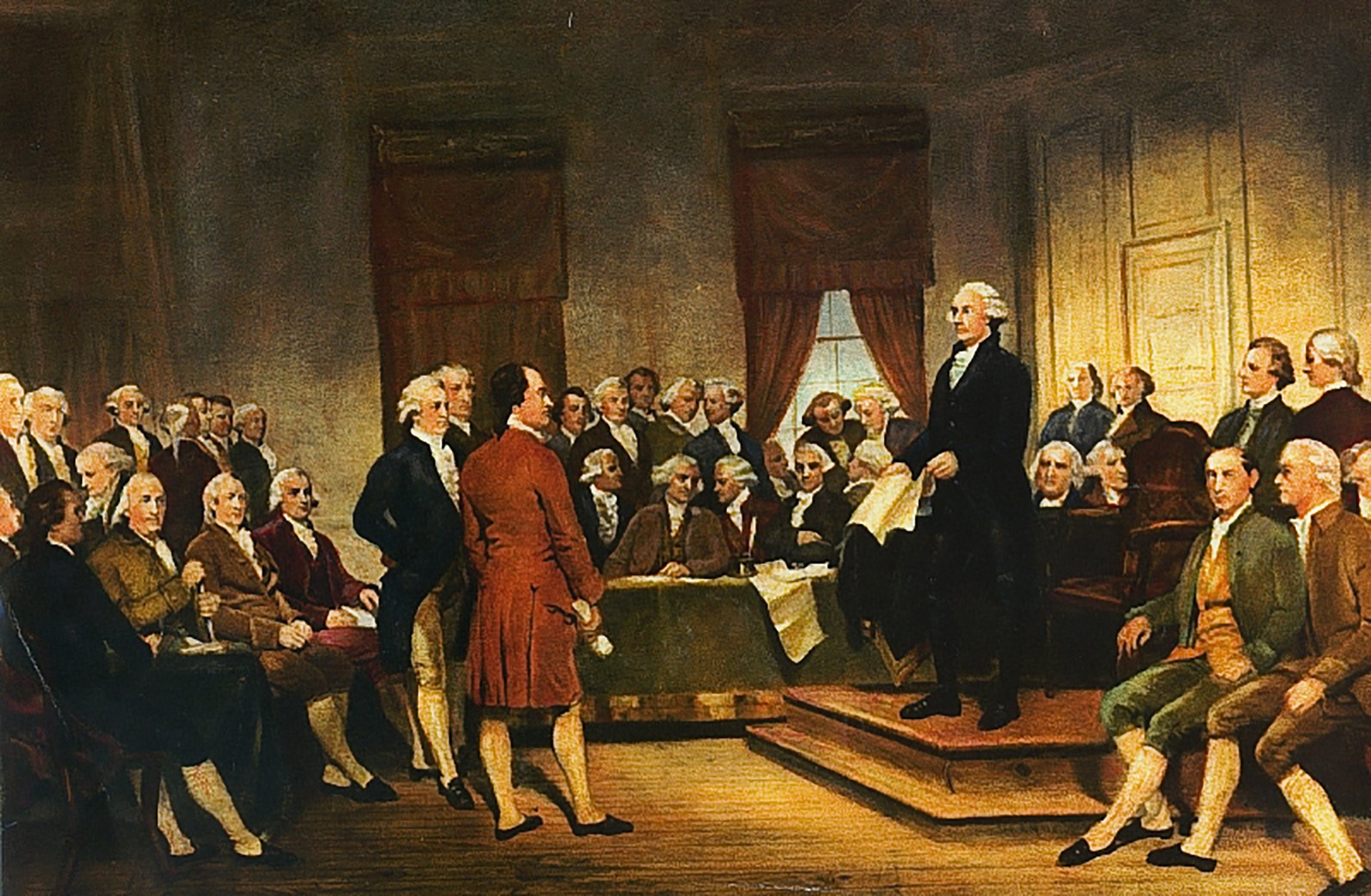
George Washington
1789–1797
“The name of American…must always exalt the just pride of patriotism.”

Theodore Roosevelt
1901–1909
“We are all Americans. Our common interests are as broad as the continent.”
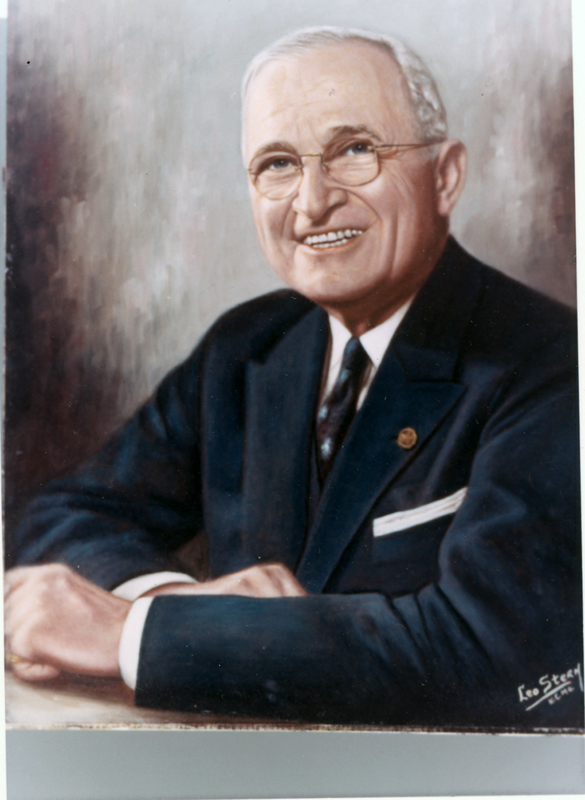
Harry S. Truman
1945–1953
“It is understanding that gives us an ability to have peace.”

Dwight D. Eisenhower
1953–1961
“Extremes to the right and to the left of any political dispute are always wrong.”

John F. Kennedy
1961–1963
“Ask not what your country can do for you—ask what you can do for your country.”

Ronald Reagan
1981–1989
“If we ever closed the door to new Americans, our leadership in the world would soon be lost.”

George W. Bush
2001–2009 · remarks released May 2020
“We rise or fall together, and we are determined to rise.”
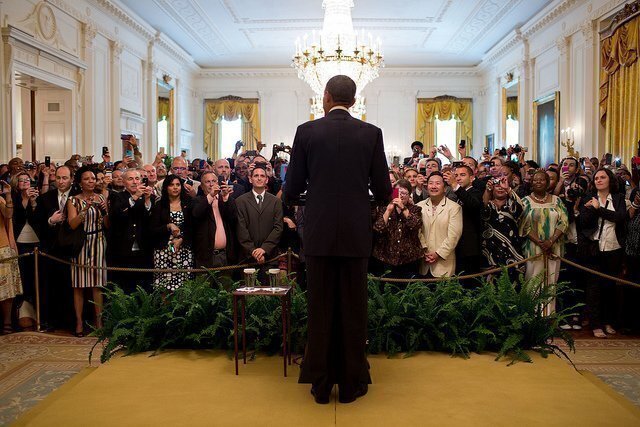
Barack Obama
2009–2017
“We are, and always will be, the United States of America.”
“The unity of Government which constitutes you one people…is a main pillar in the edifice of your real independence.”
As America’s first president prepared to leave public office, the “Father of Our Nation” used his Farewell Address to urge Americans to protect the Union they had fought to create. He warned that misguided regional and political loyalties could persuade citizens to value a smaller allegiance above the nation they shared.
E Pluribus Unum — We Are Now Americans
Washington told his countrymen that the name “American” should inspire greater patriotic pride than identities based on local distinctions. He feared that organized factions could substitute the will of a party or locality over the good of the nation and could eventually become an instrument for ambitious leaders seeking power.
He did not believe that all Americans should think alike. The president understood that political disagreement becomes dangerous when loyalty to a faction overwhelms loyalty to the Republic and when our citizens begin to see their fellow Americans primarily in opposing camps.
The LAVA Connection
Washington’s admonition gives this Presidential Perspectives collection its starting point: cherish the Union, resist efforts to alienate one part of the country from another, and remember that our political identities are smaller than our shared identity as Americans.
LEARN AMERICAN VALUES AGAIN® · PRESIDENTIAL PERSPECTIVE
Theodore Roosevelt
New Nationalism · Osawatomie, Kansas · August 31, 1910
“We are all Americans. Our common interests are as broad as the continent.”
Theodore Roosevelt repeatedly argued that the country could not prosper if Americans allowed class, region, ancestry, or political faction to become stronger than their common citizenship.
His language was characteristically energetic, but the underlying message was simple: Americans may arrive at public questions from very different circumstances, yet they remain participants in one national enterprise.
The LAVA connection
Roosevelt’s appeal fits the purpose of this collection because it does not ask citizens to erase disagreement. It asks them to remember the larger identity within which disagreement takes place: we are all Americans, and our common interests reach beyond the boundaries of any one group.
LEARN AMERICAN VALUES AGAIN® · PRESIDENTIAL PERSPECTIVE
Harry S. Truman
Farewell Address · January 15, 1953
“It is understanding that gives us an ability to have peace. When we understand the other fellow’s viewpoint, and he understands ours, then we can … work out the differences.”
As Truman prepared to leave the White House, he spoke with pride about something easily taken for granted in American life: the peaceful transfer of presidential power.
He told Americans that General Eisenhower would soon be inaugurated and that he himself would return to Independence, Missouri, “once again” as a private citizen of the Republic.
An object lesson in democracy
Truman called Inauguration Day “a great demonstration of our democratic process” and said he was glad the world would see “how simply and how peacefully our American system transfers the vast power of the Presidency from my hands to his.”
The LAVA connection
Truman joins two ideas that remain central to civil democracy: try to understand the other fellow’s viewpoint, and accept the peaceful constitutional transfer of power. We do not have to erase differences to work them out.
LEARN AMERICAN VALUES AGAIN® · PRESIDENTIAL PERSPECTIVE
Dwight D. Eisenhower
Farewell Address · January 17, 1961
“The supreme quality for leadership is unquestionably integrity.”
Dwight D. Eisenhower's perspective on extremism was grounded in extraordinary experience. As Supreme Allied Commander in Europe during World War II, he led the Allied forces that defeated European fascism. As president he continued America's Cold War efforts to confront the global expansion of Soviet communism.
Importantly, Eisenhower also understood that defending America against ideological extremes abroad did not relieve Americans of the responsibility to guard against excesses at home. In his 1961 Farewell Address, he warned of the growing influence of what he called the “military-industrial complex.” Eisenhower was not arguing against military strength; few presidents understood its necessity better. His warning was about balance—the danger that concentrated power and influence, even when developed for legitimate purposes, could become excessive.
“Capture the middle” was Eisenhower's frequently stated goal militarily and politically. His prudent, distinctly American message was that preserving freedom requires generational vigilance not only against threats from opposing ideologies, but also against institutions, interests, or political convictions seeking disproportionate influence over a free society.
“Let the word go forth from this time and place, to friend and foe alike, that the torch has been passed to a new generation of Americans…”
Kennedy described a generation “tempered by war, disciplined by a hard and bitter peace, proud of our ancient heritage,” and committed to the survival and success of liberty.
A few moments later, JFK would speak what are considered the most famous seventeen words of the twentieth century:
“And so, my fellow Americans: Ask not what your country can do for you—ask what you can do for your country.”
A call to service
In answer to President Kennedy’s moving call to service, and reflecting the diversity of perspective within the unity of our great nation, some idealistic Americans joined the Peace Corps, while other equally inspired citizens joined the Army Rangers.
The LAVA connection
The paths were different; the underlying idea was shared. Citizenship carries responsibilities as well as rights, and Americans can answer the call to serve the country in very different ways while remaining part of one national purpose.
Shining City on a Hill
Throughout his presidency, and indeed throughout much of his political life, Ronald Reagan repeatedly invoked the image of America as a Shining City on a Hill. In his farewell address on January 11, 1989, Reagan returned to that familiar image and reflected on what it had meant to him:
“I've spoken of the Shining City on a Hill all my political life, but I don't know if I ever quite communicated what I saw when I said it.”
Reagan envisioned a prosperous, free, confident, and welcoming America; a nation whose strength came not only from its institutions and ideals, but also from people of different backgrounds living together and contributing to a common society.
In that farewell, Reagan spoke of a “tall proud city” that was “God blessed, and teeming with people of all kinds living in harmony and peace,” with doors open to those who had “the will and the heart to get there.”
“Thanks to each wave of new arrivals to this land of opportunity, we’re a nation forever young, forever bursting with energy and new ideas,” Reagan said. “If we ever closed the door to new Americans, our leadership in the world would soon be lost.”
The LAVA connection
His image of the Shining City on a Hill is a vision of national confidence joined to openness: people from all corners of the world, contributing to a common society, and renewing the country from generation to generation.
“Following September 11th, I saw a great nation rise as one to honor the brave, to grieve with the grieving, and to embrace unavoidable new duties.”
Bush recalled the national response following September 11 to remind Americans that the spirit of service and sacrifice remained available to them during another period of national testing—the COVID-19 pandemic.
“Let us remember, we have faced times of testing before…”
He concluded with an appeal that went directly beyond partisan identity:
“In the final analysis, [Americans] are not partisan combatants. We are human beings, equally vulnerable and equally wonderful in the sight of God. We rise or fall together, and we are determined to rise.”
The LAVA Connection
The historical circumstances changed from September 11 to the pandemic, but the principle did not: in a national crisis, Americans share vulnerability, responsibility, and fate.
Partisanship is real; it need not be the final definition of our relationship to one another. President Bush frequently described himself as a “uniter, not a divider,” and he repeatedly used moments of national challenge to call for American unity.
“We have never been just a collection of individuals or a collection of red states and blue states. We are, and always will be, the United States of America.”
Obama’s 2008 victory speech returned to a theme he had emphasized nationally since his 2004 convention address: Americans are too often described as separate political territories when their everyday lives and loyalties overlap far more than those labels suggest.
He challenged the familiar division of the country into red and blue states by pointing to ordinary experiences that cross those political boundaries—faith, family, community, friendship, service, and allegiance to the same flag.
“We are one people, all of us pledging allegiance to the stars and stripes, all of us defending the United States of America.”
The LAVA Connection
This is perhaps the most literal presidential parallel to NOT RED. NOT BLUE. AMERICAN.™ Obama understood that political disagreements would always be a part of American identity. He encourages us to understand that respectful discussion and debate can reveal our commonalities and strengthen our unity as Americans.